Sponsored link
LoadTheTruck
Checked 2026-11-21

Load The Truck! Calculator

The loading loop in numbers: what each box pays, what upgrades cost, and when a purchase pays itself back. Built on the documented August 11, 2026 community snapshot — the in-game price tag always outranks any figure here.

The short version

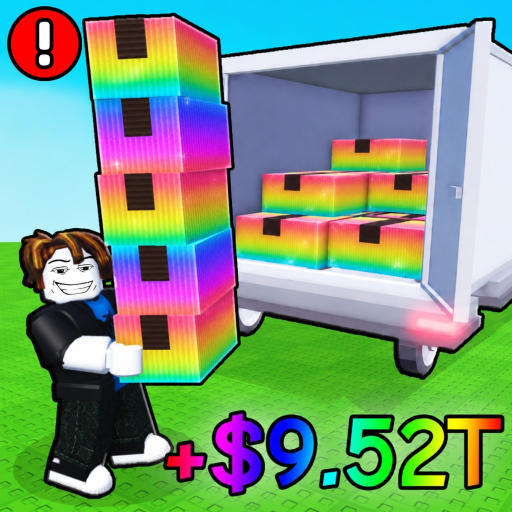
You earn Cash by carrying boxes from the pile to the truck's loading circle, and the pay is per box: Scrap $10, Cardboard $20, Wooden $50 on the documented snapshot, with a starting carry limit of 3 boxes per trip. That makes a full stack worth $60 (Cardboard) or $150 (Wooden). Every upgrade is judged the same way: a box upgrade pays back after cost divided by payout boxes delivered, a Walkspeed level pays back in the trips it saves, and the first worker ($175) pays back in the boxes it moves while you do something else. The $5,000 rebirth resets your cash and upgrades for a permanent 2x Cash, two extra worker slots, and the Water and Cotton Candy box tiers — so past the threshold, hoarding cash is wasted progress.

Current status

No calculation is published

The official description confirms cash, box upgrades, workers, luck, and box/truck multipliers, but it does not publish the values needed for a correct formula.

Required evidence

What a real calculator needs

Verified box values, truck payouts, upgrade costs, worker effects, luck behavior, and multiplier rates must be collected before numeric recommendations can be calculated.

Methodology

How the math works

Community wiki (August 11, 2026 in-game snapshot; checked 2026-10-03)

The calculator's model is deliberately simple because the game's documented economy is simple. Cash income is boxes per trip × payout per box × trips. Payout per box is fixed by your current box tier (the table below). Boxes per trip starts at 3 and grows with Stack Size. Trips are a function of Walkspeed and distance. That gives every purchase a payback quantity you can actually count: a $50 Cardboard box pays $20 per delivery, so it refunds its cost in 2.5 boxes and everything after that is profit; the $1,500 Wooden box needs 30 deliveries to break even; the $60 first Walkspeed level pays for itself in the three extra boxes a faster pace lets you deliver.

Workers change the model by running a second loading loop in parallel with yours. The $175 first worker is worth roughly 9 Cardboard-box deliveries (or 18 Scrap deliveries) before it has paid for itself — after which its output is free progress, minus the nuisance of waking it when it falls asleep.

Box tierCash costPay per boxFull 3-box stackBreak-even
Scrapfree (starter)$10$30—
Cardboard$50$20$603 boxes
Wooden$1,500 or 19 Robux (snapshot)$50$150NaN boxes
Water$7,500 or 39 Robux (snapshot)not confirmed—— · needs Rebirth 1
Cotton Candy$15,000 or 59 Robux (snapshot)not confirmed—— · needs Rebirth 1
Rainbowno cash route documented or 499 Robux (snapshot)not confirmed—— · needs no rebirth gate documented

Stack math assumes the documented 3-box starter limit — Stack Size upgrades raise it. Break-even counts boxes, not trips: 30 Wooden boxes is 10 full starter stacks. Water, Cotton Candy, and Rainbow payouts are genuinely unpublished, so no break-even is computed for them.

Worked example

From spawn to the $5,000 rebirth, on snapshot numbers

A single documented route, arithmetic only — your live prices decide the real run.

  1. 1. Scrap era. Full stacks pay $30. Deliver until the documented first upgrade is affordable: Walkspeed for $60 (2 stacks, then it pays for itself in saved legs).
  2. 2. Cardboard era. The box costs $50 and pays $20/box — stacks now pay $60. Break-even in 2.5 boxes, so it is instantly the best documented buy.
  3. 3. First worker. At $175 the worker costs about 3 Cardboard stacks; it then runs its own loading loop while you carry yours, doubling your effective presence until it falls asleep.
  4. 4. Wooden era. $1,500 is painful: 25 Cardboard stacks of savings. But stacks jump to $150, so the box refunds itself in 10 stacks (30 boxes) and out-earns Cardboard forever after.
  5. 5. Rebirth fund. $5,000 is ~34 full Wooden stacks. Stop buying minor upgrades that delay the line, claim the documented $1,000 daily mail reward, and cross the threshold.
  6. 6. Reset. Rebirth wipes Cash and upgrades for a permanent 2x Cash, +2 worker slots, and the Water/Cotton Candy tiers — then the rebuild order repeats at higher value.

Interpretation, not prophecy: the snapshot values behind this route were collected on August 11, 2026 and the game updated again on October 2, 2026. Use the route to understand which number to read in game — cost, per-box pay, and your stack size — and recompute with live prices if they differ.

Inputs

What each upgrade does at the terminal

Community wiki (August 11, 2026 snapshot; checked 2026-10-03)

UpgradeSideDocumented effectCost
WalkspeedPlayershortens travel between the box pile and the truckfirst purchase $60 (snapshot)
Stack SizePlayerraises boxes carried per trip (start limit: 3)not documented
Box SpeedPlayerimproves the box half of the loading loopnot documented
Box LuckPlayerLuck applied to your own boxes; official description ties Luck to box and truck multipliersnot documented
Worker SpeedWorkercuts travel time for automated loadersnot documented
Worker StackWorkermore boxes moved per worker loopnot documented
Worker LuckWorkerapplies the Luck system to hired workersnot documented
Worker EnergyWorkerreduces how often workers fall asleep on the jobnot documented
FAQ

Calculator questions

Is the Load The Truck calculator exact?

It is a decision helper built on documented snapshot values, not live game data. The August 11, 2026 community snapshot supplies the numbers (Scrap $10, Cardboard $20, Wooden $50 per box, 3-box starter stack, $60 first Walkspeed, $175 first worker, $5,000 first rebirth). The developer publishes no official tables, so always let the in-game price tag outrank any figure here.

How does the box math work?

Every box type has a one-time cost and a cash payout per delivered box. Value per trip is boxes-per-trip times payout, so a full 3-box stack of Cardboard pays $60 and a full stack of Wooden pays $150 on snapshot numbers. A box upgrade pays back when (cost divided by payout) boxes have been delivered — 30 boxes for Wooden's $1,500 at $50 each.

What should I buy first: Walkspeed, a worker, or a better box?

On snapshot values the documented tutorial order is Walkspeed ($60), then the first worker ($175), then the Cardboard box ($50) — but the real rule is the bottleneck: if each trip pays too little, buy box value; if trips take too long, buy Walkspeed; if the truck waits idle, hire a worker.

Do workers really fall asleep?

Yes — the community wiki documents workers falling asleep and stopping the loading loop until you click them awake. Worker Energy is the upgrade that reduces sleep interruptions. There is no officially documented sleep timer.

Why don't you show Water, Cotton Candy, or Rainbow payouts?

Because no reliable source publishes them. Those boxes cost $7,500, $15,000, and 499 Robux respectively in the August snapshot, and their per-box payouts were unverified even in the source wiki — printing invented numbers would be worse than printing none.
Where to go next

Plan the crew rather than the purchase with the worker planner, set a savings target with the cash planner, and read the loop end to end in the farming guide or the items and rewards reference. The sources page lists every number's origin.